2026-11-11 · David Torres
Monsoon Flooding Risks for Chandler Homes Near Local Washes
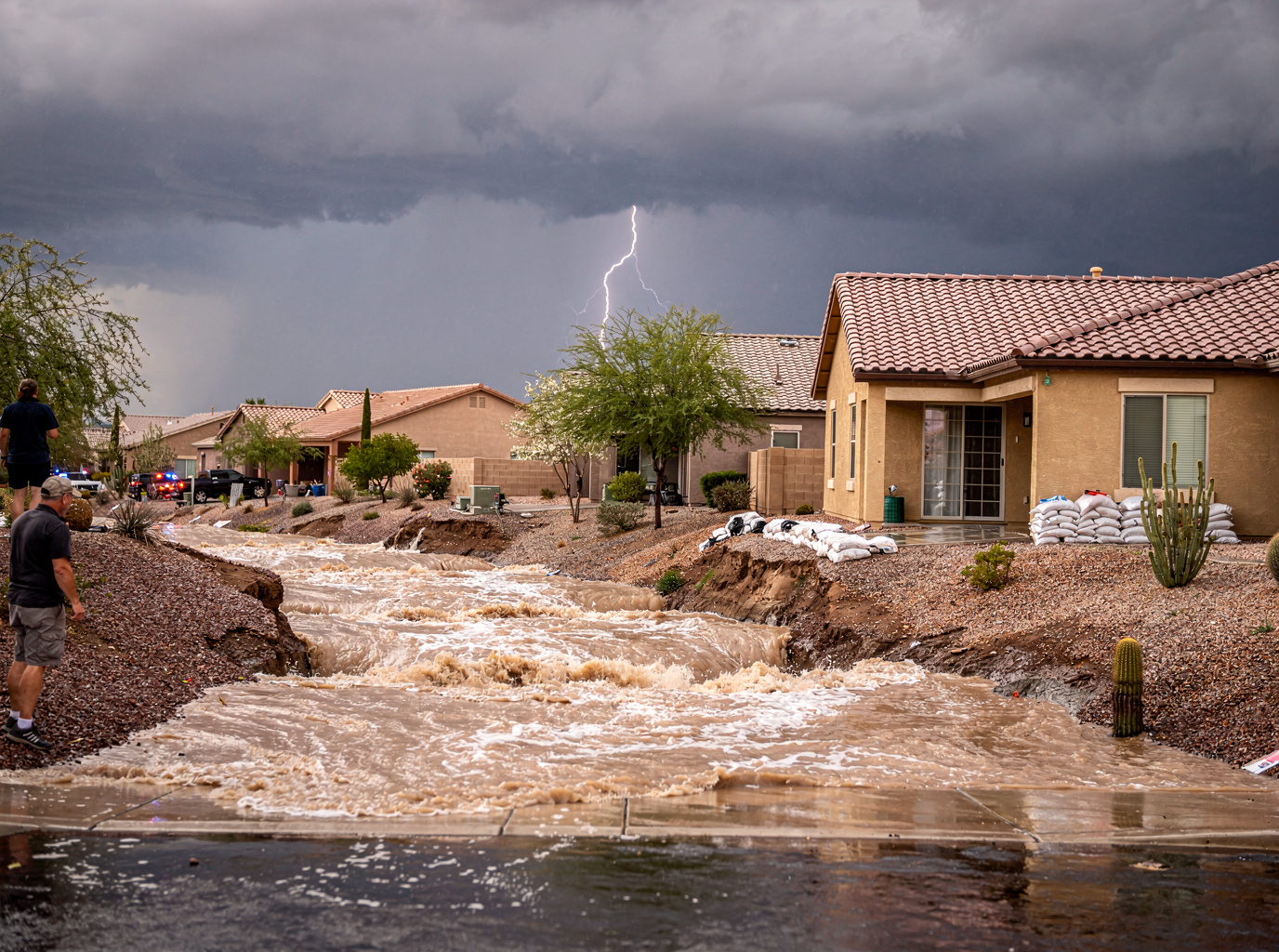
Chandler homes within a half-mile of washes experience the highest monsoon flooding risks, with water levels rising 2–4 feet in under an hour during peak July storms because the desert soil sheds water instead of absorbing it.
Monsoon Storm Patterns in Maricopa County
Maricopa County sees monsoon activity from early July through mid-September, when moisture from the Gulf of California collides with daytime heat to produce 1–3 inches of rain in 30–60 minutes. These short bursts hit hardest in flat Chandler terrain where washes like the Consolidated Canal corridor channel flow directly toward residential streets. Homes in Ocotillo and Chandler Heights sit on older lots with minimal grading, so water backs up against foundations faster than in newer subdivisions. Phoenix and Tempe report similar events, but Chandler's mix of 1970s–1990s ranch homes and limited curb-and-gutter infrastructure lets water pool longer. The mild winters that follow do little to repair cracked stucco or settled soil from repeated summer saturation.
Neighborhood-Specific Wash Exposure
Downtown Chandler properties near the old railroad corridor face sheet flow from Veterans Oasis Park during heavy events, while Sun Lakes homes back up to the Rittenhouse wash system that carries runoff from the Superstition Mountains. Chandler Heights sits lower than surrounding ridges, so water from Chandler Fashion Center parking lots and adjacent commercial roofs funnels toward single-story homes built on slabs. Ocotillo lots often have shallow swales that were adequate for 1980s rainfall but now overflow when storms exceed 1.5 inches. These patterns differ from Mesa or Tempe because Chandler's east-side washes run through denser older housing stock with less recent flood-control upgrades.
How Desert Climate Changes the Job
The hot desert climate keeps soil dry and hard until the first monsoon, then turns it into a slick surface that moves water at 3–5 mph across driveways and yards. This speed erodes landscaping and pushes sediment into garages and crawl spaces common in Chandler ranch homes. Air-conditioning condensate lines already run near capacity in 110-degree summers, so any additional roof or wash water quickly overwhelms them. After the storm passes, trapped moisture under stucco and in wall cavities stays hidden for weeks because low humidity masks the smell until mold appears. Readers dealing with hidden moisture after these events often continue to Detecting Hidden Leaks From AC Units in Chandler Desert Homes for next steps.
Practical Steps After Wash Overflow
Homeowners should photograph water lines on walls within the first 24 hours and shut off power to affected rooms before water reaches outlets. Remove furniture and carpet pads immediately to limit warping in the dry heat that follows. Document every item moved for insurance photos. When standing water exceeds 2 inches or reaches electrical boxes, contact professionals who handle Water Damage Restoration and Emergency Water Damage Restoration in Chandler. Properties in Sun Lakes have benefited from the same rapid extraction methods used across Sun Lakes.
Long-Term Prevention in Chandler Housing Stock
Re-grade yards so water flows away from slabs at a minimum 6-inch drop over 10 feet. Install French drains along the back of lots that border washes, routing to the street rather than into the wash itself. Check and clean scuppers and downspouts every spring before monsoon season. Older Chandler Heights homes often need additional weep holes drilled in stucco to let trapped water escape. These steps reduce repeat saturation that leads to Water Damage Repair calls later in the season.